Tuesday, December 13, 2016

Wheatgrass Powder Organic Supplement | Green Smoothie | Non GMO
Wheatgrass Juice Powder 8oz - 226g Raw, Organic & Non GMO
Sun Pyramid's Organic wheatgrass juice powder is a Superfood with up to 454 servings in an 8oz bag : http://amzn.to/2gEAIsg
I started using this brand and love it. It's a nice powder that is easy to add to any smoothie for all your supplements and staying healthy. Helps me have energy all day long. I haven't had to take my afternoon naps! Yeah!
I add this directly to my smoothie and use the Vanilla powder by this company also. It's Organic and GMO FREE --- love that!
Made with the best Organic Wheatgrass Supplement. Perfect addition to your smoothies. Raw and Gluten Free Wheat Grass
Wheatgrass Powder contains a wide range of vitamins, minerals, and nutrients with very few calories and carbs, one of the best vegan protein powder sources.
Organic Wheat grass Powder is a concentrated antioxidants rich formula. Includes 17 amino acids and high in raw protein organic
Use Wheatgrass Powder Organic Supplement in smoothies to get all countless health benefits
Looking for More Recipes? http://www.ServeitatHome.com
Raw Vegan Super Food Protein Powder | Vegan Protein | Gym Workouts
Raw Vegan Protein Powder : http://amzn.to/2hJQ3Ux
Tired of the same old work "What's for Dinner" visit our website for more recipes : http://www.ServeitatHome.com
40oz (1133g) 2.5lb Vanilla 54 Servings Vegan Protein
About the Product
The Best Vegan Protein Powder. Brown rice plant based protein powder with Vitamin B-12 & Spirulina Protein, this is much more than just a protein powder
Raw Protein Powder made with high quality ingredients. Certified by manufacturing & safety institutions making one of the best Vegan Protein you can find
Sun Pyramid’s Plant based protein powder and Vegan Rice Protein Powder is Gluten Free, Soy Free, Dairy Free & Non-GMO Protein
Powder Vegan
This Plant Protein Powder is an excellent Raw meal replacement with great taste & full of nutrients. Fully organic protein powder
Sun Pyramid’s Raw Vegan protein powder organic also used as meal replacement. Recommended for people with dairy intolerance and for vegan protein and weight loss shakes
Raw Vegan Super Food Protein Powder | Vegan Protein | Gym Workouts
I really enjoy this Vegan Protein Powder and wanted to share it with you. You can find it here : http://amzn.to/2hJQ3Ux
Monday, December 12, 2016
Tips on how to introduce a new meal to the family
Tips on how to introduce a new meal to the family
In the last post we discussed mobile apps for foodies that can help you find recipes, learn cooking techniques, create grocery lists, and more. At this point, you’re probably really inspired to start cooking up a storm. If you only had to worry about yourself, trying out new recipes wouldn’t be such a big deal.
But what if you’re cooking for others?
In this post we are going to talk about how to introduce new dishes to the family as you expand your range of recipes.

Make Small Changes
The first thing to keep in mind is their tastes. Remember the movie Julie and Julia, where Amy Adams decides to cook her way through famous French chef Julia Child’s classic cookbook? If you have a young family and/or are overweight, chances are this would not be the best book to start with.
Instead, think about what they like to eat and mix it up a little. Change the chicken, perk up the potatoes, vary the veggies.


Restaurants Can Help
When going to restaurants, order strategically. Try dishes you’ve never had before. Get everyone in the family to order something different and taste each other’s. Rotate the plates clockwise around the table so everyone gets a taste, and let each person keep either their favorite, or their own.
Make notes on what you have that the kids really like, and then discover how to make it yourself. When serving the dishes, you can say, “Remember when we went to X restaurant and had Y dish? I’ve learned how to make it myself so we can enjoy it any time.”

Make It Attractive
Another way to get them excited to try your new experiments is to make them as pretty as possible. Studies have shown that we eat with our eyes long before we put a forkful in our mouths. Brown lentil stew is delicious, for example, but unfortunately looks like a pile of cow poo.
One suggestion for getting our daily allowance of fruits and vegetables is to “eat a rainbow” - that is, one food for each of the seven colors of the rainbow. Lay out a pretty fruit platter with cheese, or vegetable platter with dip, or roasted vegetables, and you’re more than likely to see the food disappear.
But what can you do if you have to feed a picky child? We will discuss this headache in the next post.
Until next time!


Sunday, December 11, 2016
Organic farmers understand these principles ...
Organic farmers understand these principles
In a recent debate on
social media, I was surprised at how many people were convinced that organics
is not sustainable, and that it is even harmful to the environment. After much
trawling through comments and eliminating one or two 'bogus' social media profiles,
it became evident that many of these organic farming critics have a lack of
understanding around what organic means, and the principles behind it.
Let's address some of
the common statements that were made:
"Only about 30%
of organic food is actually even organic"
First of all, we're
not sure where this person derived the number of 30% from. However, what they
may be referring to is that there are foods which have the word 'organic' in
their name, but are not actually certified. This is likely where the notion
that 'organic food is not actually organic' has come from. A food producer may
genuinely believe their product is organic and that the ingredients in it have
been organically grown. Or they may have just used the word because they can (marketing
purposes). However, the best way to ensure that what you are eating really is
organic, is by choosing products that are certified. If you choose certified
organic, you can rest assured that the product has met strict organic criteria
and standards.
"Organic
pesticides are worse for the environment"
This statement shows a
lack of understanding of organic principles. Organic systems use principles
such as manure to feed the soil, crop rotation, ecology and biodiversity, and
companion planting to grow strong, healthy crops. Organic farmers understand
these principles and follow them so that there is little need for pesticides.
Many organic farmers will choose to remove weeds manually rather than apply a
natural pesticide. Yes, there are pesticides that are allowed to be used in
organic farming but they are naturally derived and are biodegradable. If they
are used, the focus is on control, rather than annihilation of pests because
organic farmers understand the importance of a fully functioning eco system.
This statement
prompted me into an email discussion with Philippa Jamieson, editor of Organic
NZ. Philippa explains: "Organic growers are allowed under certification
rules to use a certain quantity of copper sprays in orchards for fungal
disease, but it's limited. Copper is a heavy metal and can build up in the
soil. Apart from that I haven't heard of any organic pesticide that anyone in
the organic sector (or outside of it) has expressed any concern about
whatsoever!"
"The organic
system is un-regulated"
I suspect that the
worry here is similar to the concern behind the first statement ("Only
about 30% of organic food is actually even organic"). The problem here may
be more related to the consumers' perception that something is organic, by the way
it is marketed. Remember to choose certified organic so you can rest assured
that the product you are choosing has been regulated. In NZ, the organic
certification bodies are Bio Gro NZ, Asurequality and OFNZ.
I am far more
concerned about the regulation of non-organic pesticides because so many
harmful pesticides have been regulated for use.
"Organic farming
is not sustainable"
The argument here is
that yields from organic farming are lower so we need more land to get the same
amount and balance of food and would have to destroy forest to do so.
To respond to the
critics on this one: We could go organic if we all ate less meat and more
vegetables, pulses and grains as it takes far less land to produce these foods
than it does for meat. A surplus of food and environmental problems exist with
the traditional system.
Additionally, studies
are now noting comparable yields in organic farming - the gap is closing.
Just Organic is an
online organic grocer, providing healthy grocery options, conveniently
delivered to New Zealand households and workplaces. We make it easy and
convenient to be healthy with weekly deliveries available, and FREE delivery in
Christchurch. Visit https://www.justorganic.co.nz/
Natural Balance health
and fitness inspires people to make positive, sustainable choices to their
health, fitness and lifestyle. Visit: http://www.naturalbalance.co.nz
Article Source: http://EzineArticles.com/expert/Elly_McGuinness/1256243
Article Source:
http://EzineArticles.com/9518171
Organic is the new buzzword! Do You Think So?
Organic
is the new buzzword.
But
there are differences between Certified Organic, Organic and Natural that you
may be wondering about and should definitely know.
Everyone
seems to be talking about it, the mothers at the school canteen, your boss on
her "only green vegetables will enter my stratosphere" diet, and
maybe even your teenage daughter in an attempt to get rid of the pimples she
didn't invite along on her puberty journey.
But
like all buzzwords, there is a lot of misunderstanding around the word and some
nasty conundrums as well. Believe it or not, the idea of organic is really
quite simple, just like everything Mother Nature related. Basically, anything
confusing and wrong with it is probably caused by mortals, and maybe some
vampires... but that's another story.
If
keeping up with all the organic nuances is doing your head in, don't worry.
This guide should set you straight.
1.
There really is a difference...
Between
Certified Organic, Organic and Organic/Natural based products, that is. I don't
blame you for being a little iffy about this one because as someone immersed in
this field of expertise, you would think I'd have this one down pat by now.
Seriously,
I thought I did.
But
as I spoke to a potential distributor in Thailand last week, I realised that
maybe I only understood the difference in Australia. In all my naivety, I
actually (rather stupidly, it appears) believed that maybe there would be a
global definition for Organics. Silly me because that would make it, oh I don't
know, easy!
It
turns out that in Australia at least, Certified Organic refers to products that
are Organic and have been declared as such by an appropriate
government/independent body. Companies that are manufacturing Certified Organic
Products probably have CEOs that have lost all their hair by now. I'm not
kidding; I'd actually be prepared to put a wager on it which is saying
something considering my dismal betting record. Acquiring Organic Certification
is not a small feat, it takes loads of time, lots of documentation, going back
and forth a gazillion times and heaps of finance.
Organic
is probably (don't shoot me, I did say probably and even italicised it) exactly
the same in terms of quality and processing as Certified Organic without the
official badge of honour. What stops some people from purchasing organic
however is that there's no official proof. It's like swearing that you saw a
spaceship without the photograph to prove it. You may be wondering why I've
italicised official twice before. It's because the manufacturers of Organic
Products should have some sort of documentation stating that the products have
had no chemical and unnatural processing going on before it got to your
fingertips. Should doesn't always mean they do, which is wrong. Very wrong. At
least in my book anyway but we all have different yardsticks... you get the
picture.
Basically
organic products are based on trusting the manufacture within reason. Though
there's no official certification, the document stating the above still means
the manufacturer better be telling the truth or they're likely to be in hot
water if someone finds out otherwise.
Organic/Natural
Based is often referred to as Organic by Default.
What
this means is that an organic based product is likely to be exactly the way
Mother Nature intended. It's like growing your own tomatoes in your backyard
and then selling them at your kids' lemonade stand. They were grown exactly the
way the environment wanted them grown, the naturally perfect way and you don't
have to have any documentation stating so because well, Mother Nature didn't
pass one along, did she? Because if she did why are you here reading this post?
Go and tell someone now and get rich and famous.
2.
Should you even bother or is Organics nothing more than a buzzword for my much
richer neighbour?
Honestly,
I'm going to put my foot in it because it is one of my top three skills on my
resume.
Though
I am pretty much in charge (when my dad isn't watching) of a Certified
Organic/Organic/Organic based sustainable organisation located in a small
picturesque town that makes it hard not to be motivated to live as closely to
nature, the fact is that there is no comprehensive proof that organic is
actually better for you.
But...
because you know there's always a but, many people who swear by Organic
Products will never tire of telling you that you can't put a price on common
sense, or as my mum say's, common sense is not a commodity sold at the local
vegetable market. You have no idea how much using that saying pained me because
it was the quirky response I would often get when I came back home and told her
about something stupid I did (which till this day, continues to be often).
It
makes sense to use what Earth has created so bountifully for us seeing as we're
just one of the many creations of Mother Nature. It's interesting how every
continent has managed to come up with something useful naturally for its
inhabitants. India has Neem (The Tree of the 21st Century as declared by the
United Nations), Australia has Tea Tree Oil, the United States has Echinacea
while Europe has Geranium... you get it. Nature's made it so there's something
for everyone.
What
this signals to Organic enthusiasts is that the environment knows best. There's
a reason why certain plants and herbs are native to the areas that they are,
they're made up of stuff that your body needs because of where you live.
Ineloquent, I know, but you've got it down-pat.
What
does this mean for Natural Product lovers? They're willing to put their buck
where their mouth is and pay for what they believe is going to keep them and
their families healthy because it's only going to save them a lot of moolah and
heartache on hospital bills later on in life. Just saying.
3.
Okay, whatever. But why are Organic Products so much more expensive?
I
get it. They really are.
And
while it doesn't really cost you an arm and a leg to live organically (no some
of our customers, it really doesn't), they do cost more than their non-organic,
chemical filled substitutes.
People
can't often wrap their head around why this is exactly so I thought I'd give
you my two cents, naturally!
I
can't tell you how hard it is to acquire Certified Organic Products status
because this is a PG article and my keyboard is likely to break after I get
through all the swear words... from every language on the planet and Uranus.
Basically, it's as hard as um, nails.
As
you can imagine, it is difficult to ensure that your field of produce is
completely, 100% natural. This is because mostly, fields are often clumped
together and not all fields in an area are proclaiming to be organic. Which
means that pesticides used on one field can very understandably (due to weather
conditions such as wind changes and rain) land up on a "Certified
Organic" field.
Certified
Organic farmers are often extremely stressed obviously. Imagine having to
ensure that the weather listened to your whims and fancies. Don't believe me,
check out this (what some would refer to as ludicrous) news article. It is
becoming increasingly expensive for growers of natural produce (not to mention
difficult) to fulfil the requirements of organic certification which is proving
to be a massive burden on farmers who (for the most part) are trying in earnest
to do the right thing.
Sure,
organic produce is fast gaining popularity but the headaches surrounding the
promotion and growth around it makes certified organic farming more of a labour
of love than anything else. Organic farmers really do believe in the concept of
working with Mother Nature rather than against it. They believe in allowing the
Earth to take care of its produce the way it was always intended, with natural
resistances to pests and allowing foods to grow when they're supposed to.
Organic
farmers have to pass a little bit of the expense of growing their produce onto
the consumer to ensure that everyone is getting the best, most natural product
possible.
4.
Do I really need Organics?
Well,
do you really need those new pair of Louis Vuitton shoes or that Versace suit
you've had your eye on for the past six months. Chances are no. But that
doesn't change you wanting them, right?
It's
pretty much the same for Organic foods, except instead of evolving from our
slightly (dare I say) vain place, the need for organic foods is probably coming
from our gut and taste buds.
Your
body wants organic and naturally made and grown produce and though there is no
official proof that you need it, I would personally rather rely on my internal
organs knowing what's good for them than what some scientist (possibly financed
or aligned to some large multinational) is preaching to me.
Though
I am sceptical of my taste buds most of the time (particularly when they crave
hot fries and some sour cream and chives dip so they don't get lonely), when
they tell me a certain organically grown tomato should be on the menu tonight,
I listen a little more attentively (predominantly because they seem to be
behaving themselves - which is rare).
So,
to cut a long story (or in this case article) short, though I may not need
organics, I definitely want them. Just like my next pair of Louis Vuitton's so
hands off!
5.
Seasonal Foods are better for you?
Truly
Organic Foods are seasonal by their very definition. Because they're grown the
way nature intends, they grow when they're supposed to which often means that
your body is getting the nutrients it's meant to when it needs them the most.
They
also have less of an impact on the environment which has got to be a good
thing, right? Not only do consuming seasonal fruits ensure that local farmers
have more of a chance when battling against large multinationals and cheaper
prices from overseas, it also guarantees that the produce you consume is likely
to be fresher and therefore healthier.
Organic
produce that is also locally produced is the best option as it means that
you're helping to send your hard earned money back into your precious community
which will only serve to make everyone around you happier and more financially
stable, which has got to be a bonus, right? You're happy, you're neighbour's
happy, the dog's happy... you understand. I bet you're already feeling happier,
am I right?
Unfortunately
though, often local farmers can't afford to become certified organic, however
many local farmers may already be using organic methods (without the
certificate to prove it). Visit your local farmers market and speak to the
farmers selling their produce, you may just find that what they're doing is
already organic anyway. Want some more information on why everyone should be
bonkers about locally grown food? We hear you.
6.
There is an ongoing push for Organic Foods to be more Fairtrade
Organic
produce is not guaranteed to be Fairtrade, let me just put that out there
before you spam me with hate mail. I'm more of a lover, you see.
There
is a general consensus that Organic and Fairtrade should be amalgamated to
better serve the environment and community. After all, as harsh as it may
sound, people tend to be less concerned about their environment when the more
pressing matters of getting food on the table for their families is at the
forefront of their mind which is why there is such a push for organic produce
to also be Fairtrade, particularly in developing nations.
Let's
be completely honest here, it's not rocket science, is it? Everyone's
(regardless of culture or territories) number one priority is providing for
their families. Fairtrade practices ensure that farmers are able to sustain a
decent lifestyle which makes it easier and profitable for them to ensure that
the produce reaching your dining tables are as organic and natural as possible.
It's a win-win solution for everyone and considering how far and few in between
they are in general life, I say grab it with both hands when we can.
7.
Organic Foods last longer
Last
year I was so shocked to see how fresh my organically grown plums (from my
backyard) looked nearly four weeks after being picked. I guess I have my
gorgeous plum tree (I've nicknamed her Plumpilicious) to thank for piquing my
interest in the wonder of produce grown the way Mother Nature intended (not to
mention the scrumptious fruit my neighbours, workmates and I got as well from Plumpilicious's
beautiful bounty).
As
it turns out, organic produce really does last longer than their more
conventionally grown peers.
Which
makes you wonder, doesn't it? What do un-organic products have in them, that
even after all the preservatives and chemicals in them, they rot quicker? I
have absolutely no idea but articles like this one definitely shed more light
on the topic.
So,
in the end, I would suggest that it depends on the type of produce with regards
to whether organic or their non-organic counterparts last longer. Or it could
just be that Plumpilicious is one of a kind, I always had an inkling.
To
wrap this all up... Are you sold on Organics or not?
I
hope that this fairly comprehensive guide has helped clear some of the
misconceptions and confusion around the whole Organic concept for you. If
nothing more, I hope it's presented you with some good articles for you to sink
your teeth into around the fast becoming popular Organic space.
Many
of our customers are doubtful and unsure of what the purposes of Organic
products are and whether they're deserving of all the hype they're getting at
the moment. After working in an Organically geared organisation, I can't tell
you to go out and swap all your non-organic products with organic because that
would look suspicious. But, I would strongly urge you to try the concept out
after educating yourself on the whole shebang.
I
can present you with countless facts and figures (as well as case studies and
testimonials) on why you should go the Organic route but in the end, humans
like to try before they buy. It's this wonderful inquisitive mind we've all
been gifted (or cursed - whatever you prefer) with.
So
the only question that remains is, are you in or out? Let us know.
Nim-Véda
Australia is committed to manufacturing Organic Based Personal Care Products
(around Neem & Ayurveda) and High Quality Gourmet Organic Raw Food
Ingredients. We write extensively for a variety of reputable Organic and Health
oriented blogs (including Leaders in Heels, Natural Beauty Expert, Mouths of
Moms, and many more) and include tons of valuable information around the health
space at http://www.nimveda.com/blog. For more information on us, please visit
http://www.nimveda.com.
Article
Source: http://EzineArticles.com/expert/Mituri_Pradip_Sharma/2290969
Article
Source: http://EzineArticles.com/9436324
Friday, December 9, 2016
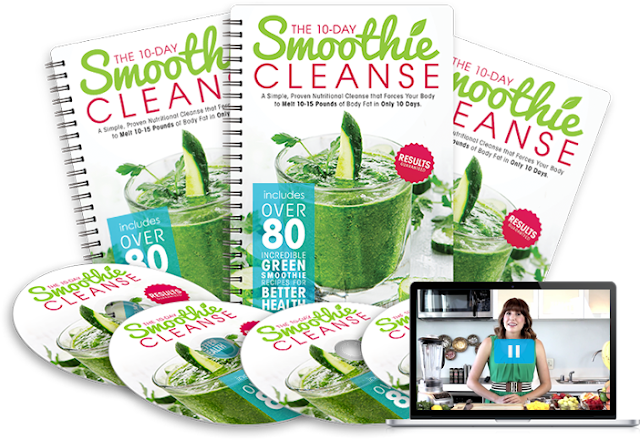
Green Smoothie Cleanse: Lose 10 to 15 Pounds in Just 10 days!
Green Smoothie Cleanse: Lose 10 to 15 Pounds in Just 10 days!
Do you need to lose weight fast for your special day?
Is your dream vacation around the corner and you'd love to enjoy it in your dream body? But you'd also like to lose that weight in a healthy way so you don’t feel sick and washed out? Then welcome to the 10-day green smoothie cleanse! This evidence-based cleanse program will help you lose 10 to 15 pounds and improve your health in just 10 days!

Is your dream vacation around the corner and you'd love to enjoy it in your dream body? But you'd also like to lose that weight in a healthy way so you don’t feel sick and washed out? Then welcome to the 10-day green smoothie cleanse! This evidence-based cleanse program will help you lose 10 to 15 pounds and improve your health in just 10 days!
Wondering how this cleanse works?
Well, it revolves around healing using REAL foods –the 10 days of the cleanse involve enjoying three specially formulated DELICIOUS and filling fat burning green smoothies daily plus two healthy snacks.
Doing so helps:
Well, it revolves around healing using REAL foods –the 10 days of the cleanse involve enjoying three specially formulated DELICIOUS and filling fat burning green smoothies daily plus two healthy snacks.
Doing so helps:
• The body get rid of accumulated toxins that can make it hard to lose weight and keep it off.
• Nourish the cells from the inside out.
• Rebalance hormone levels to promote weight loss.
• Reset the brain to help eradicate food cravings that can thwart weight loss.
• Optimize energy levels by healing the metabolism thus putting the body in a fat burning mode.
The above, in addition to the simplicity of this program, is what makes it revolutionary and unique. The best part is that all these facts are based on scientific literature. The cleanse guide also provides:
• A master formula to create the perfect filling and FAT-BURNING smoothie.
• Tips on how to deal with unplanned events.
• A list of proven health benefits of green leafy vegetables.
• Details about the six foods that need to be avoided for optimal health and rapid weight loss.
• A thorough explanation about why blending is way healthier than juicing.
• A list of scrumptious meal recipes and snack ideas.
• Tips on how to optimize the cleanse, save time when making smoothies and how to blend the perfect smoothie.
• Suggestions on how to safely modify the green smoothie recipes to suit individual preferences.
• Tips on how to maintain the lost weight as well as factors that can cause weight fluctuations.
• Unique advice on how to choose the best protein powders out there and how to add them to the smoothies for those who are highly active and need more protein.
• And much, much more!
There is ZERO guesswork involved in this 10-day cleanse– everything is laid out in a very simple ‘start with this, then do that’ set of advice. Once the program is purchased, the user gets instant access to step-by-step instructional videos, printable shopping list and delicious recipes, as well as the PDF manual to guide you through the entire program.Worried that this program will break the bank? Don’t be: the ingredients required in the smoothie recipes are easily affordable and widely available – you won’t need to go on a safari to find the ingredients needed during the 10-day cleanse.
Need to lose more than 10 pounds?
The cleanse also offers a 30 day challenge which consists of three 10-day cleanses and three to five days of rest in between each cleanse. If the challenge sounds daunting, you also have the possibility to try the modified daily cleanse plan during which one of the three green smoothies is replaced by a solid meal.
The cleanse also offers a 30 day challenge which consists of three 10-day cleanses and three to five days of rest in between each cleanse. If the challenge sounds daunting, you also have the possibility to try the modified daily cleanse plan during which one of the three green smoothies is replaced by a solid meal.
All the recipes are gluten-free and vegan and the smoothies can be consumed by everyone irrespective of age, ethnicity or amount of excess weight to lose. However, you may still want to get the green lights from your health care provider before starting this cleanse. Moreover, we do not recommend that you start the cleanse if you are pregnant or breastfeeding.
Throughout this cleanse, you’ll be nourishing all your cells with a steady intake of nutrients that will help:
- Purge built - up toxins that harm your body and predispose you to disease
- Optimize your energy levels and reinvigorate you
- Support healthy cell growth
- Regulate your blood sugar levels
- Balance your hormones
- Banish unpredictable mood swings
- Improve libido
- Improve brain function
- Build lean muscle
- Heal your metabolism
- Burn unwanted body fat (even when you’re snoozing)
Subscribe to:
Posts (Atom)